- Inside Out Engineering
- Posts
- The Implementation Engineer
The Implementation Engineer
Where the rubber meets the road


Nikki Maginn & Blake Sanchez
October 16, 2025
We’ve all been in the room where the whiteboard is full, the energy is high, and the concepts feel unstoppable.
But then comes the quiet question: “So… who’s actually going to build this?”
Enter the Implementation Engineer.
They’re the doers.
The ones who don’t just believe in the plan—they execute it.
They bring order, persistence, and rigor to make sure that what was dreamed up actually takes shape in the real world.
Yet too often, they’re undervalued. Organizations sometimes see them as “just the worker bees” instead of the linchpins who transform possibility into progress.
So let’s hand it over to Blake Sanchez, an engineer who has led multiple large-scale rollouts and knows firsthand the impact of an implementation mindset.
Blake’s Take
The implementation engineer is the MacGyver of the engineering world.
They ensure that everything works when the rubber hits the road.
Sometimes this means patching things together when the application environment doesn’t quite fit the design.
Fixing interfaces, tuning and adjusting motor speeds, and sometimes cutting to fit.
I have, on several occasions, written PLC code, on-site in front of the machine.
Often, this was for equipment that I also designed and wrote code for before going on-site myself so there wasn’t anyone upstream to blame for my shortcomings in my design.
Mistakes come from anywhere and there really isn’t time to do a root-cause analysis and fix engineering gaps when you are on the floor trying to get something running by a deadline.
I was helping commission a warehouse with conveyor lines overhead where we discovered the mechanical installers had mistakenly installed a large section of conveyor backwards as it wasn’t clear from the drawing which end was which.
After some review of the drawings and quick thinking on the part of the engineers on-site, we decided the fastest fix was to pop the rollers out of the rails and put them back up with the correct layout and wiring.
That was much better than pulling the entire line off the mounts and putting it back up in the correct direction.
Without question, a fleet of engineers got to work doing the labor of pulling rollers down and correcting the installation.
This is one of many stories I could reference about implementation engineers working with what they have in front of them to reach the end goal.
Much like MacGyver does at the last minute in each episode with the most surprising combination of miscellaneous things.
Having grown up and worked early in my career around machinists, many of them would agree that the implementation experience is crucial to becoming a good engineer.
One of the most common sayings I heard from many machinists was “to know better than to put a 1-inch hole in a 1-inch bar because it fit on the drawing”.
While I do believe you can become a great engineer in many paths, their point was well taken by a younger me.
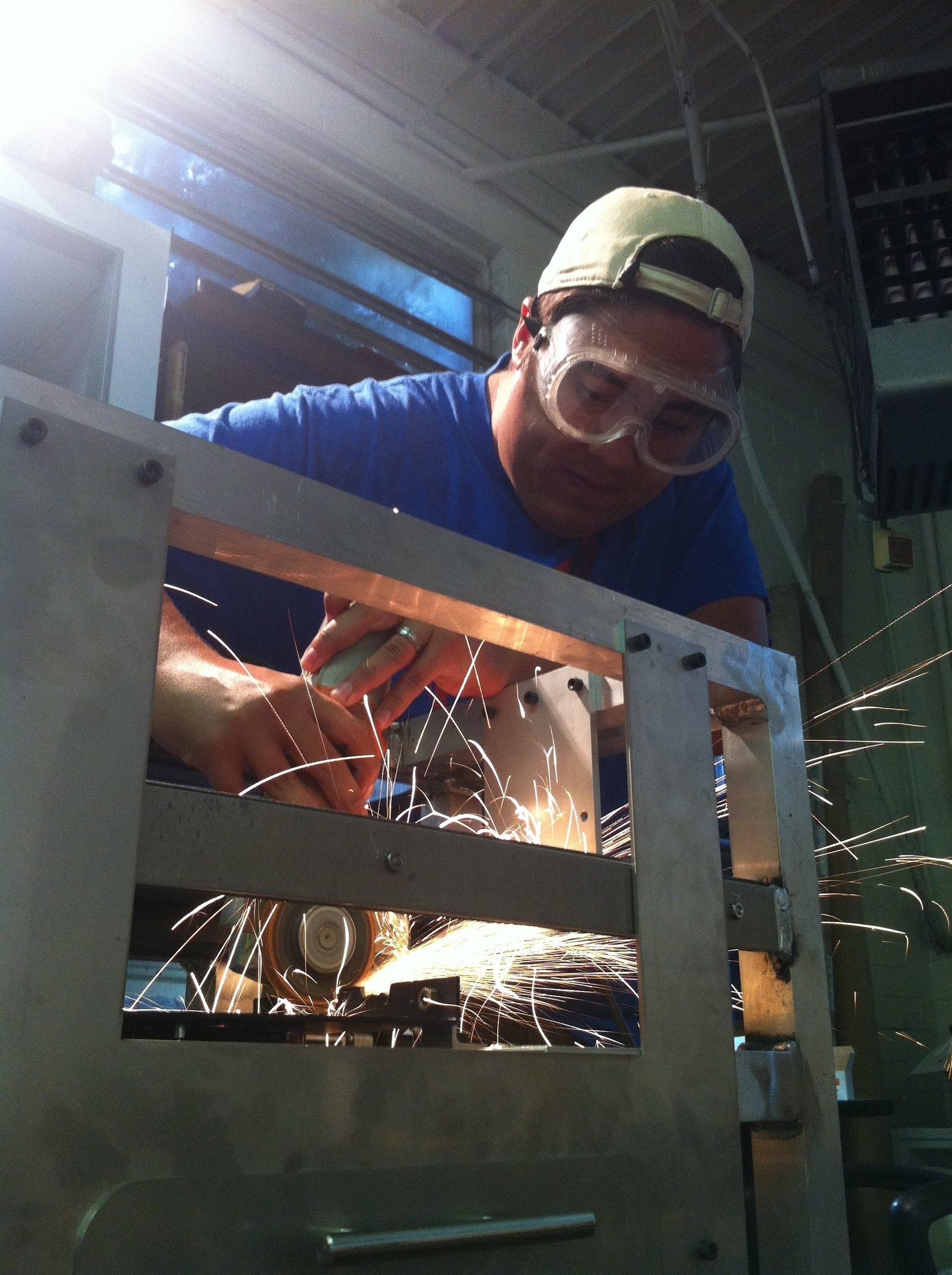
Me as a young engineer putting together a welded assembly that turned out to be “cut-to-fit”.
EQ Superpowers of the Implementation Engineer
For the Implementation Engineer, it’s:
Focus — keeping the team anchored on the “next step forward.”
Resilience — staying steady when obstacles (inevitably) appear.
Accountability — ensuring promises translate into delivery.

Gif by SVT on Giphy
The EQ Superpower: Focus + Resilience + Accountability
Neuroscience gives us insight here. Implementation engineers rely heavily on the anterior cingulate cortex, which manages error detection and task persistence. This is the brain’s “keep going” engine.
Unlike ideators who thrive on novelty or conceptors who love structure, implementers get their dopamine hits from completion.
Checking the box. Seeing progress. Crossing the finish line.
That’s why their resilience is so powerful. Even when others lose steam, implementers keep moving. Their accountability is driven by integrity: making sure what’s promised gets delivered.
And when paired with strong communication skills, implementation engineers shine in front of customers. They can ask clarifying questions, uncover root issues, and translate challenges into clear, doable actions.
So what can we do as engineering leaders?
Supporting implementation engineers means giving them the conditions to thrive—structure, recognition, and space to recover between pushes.
Here are 5 ways leaders can do that:
1. Protect focus and flow.
Implementation Engineers do their best work when distractions are low and clarity is high.
Actionable ways to do it:
Set clear, achievable targets with well-defined priorities.
Limit context-switching by shielding them from unnecessary meetings.
Create “no-interruption” blocks for deep work across the team.
Neuroscience Insight:
The prefrontal cortex can only hold one complex task at a time. Every interruption resets the brain’s focus, costing up to 20 minutes of productivity per switch. Protecting flow preserves both cognitive energy and creative accuracy.
“Focus is the art of knowing what to ignore.”
2. Reward precision, not perfectionism.
Implementation Engineers care deeply about getting it right. Without guidance, that can turn into burnout or over-engineering.
Actionable ways to do it:
Celebrate progress milestones, not just final deliverables.
Encourage iterative testing and feedback loops over “big bang” releases.
Normalize saying “this is good enough for now” when it meets the goal.
Neuroscience Insight:
When progress is recognized, dopamine reinforces motivation. When perfectionism takes over, amygdala activation (fear of failure) rises—reducing problem-solving ability. Leaders can literally rewire motivation by rewarding iteration.
“Perfection is the enemy of progress.”
3. Close the loop between build and impact.
Implementation Engineers light up when they see what their work achieved. Connection fuels mastery.
Actionable ways to do it:
Bring customer feedback directly to the engineering team.
Share success metrics tied to their work—uptime, satisfaction, retention.
Let them present their finished work to stakeholders so they see its value firsthand.
Neuroscience Insight:
Seeing the impact of one’s work triggers ventral striatum activity, deepening intrinsic motivation and sense of purpose. It transforms “I built this” into “I made a difference.”
“People want to know they matter. Show them the difference they make.”
4. Encourage reflective communication
They’re often the bridge between vision and reality — which means they need to speak up early when something’s not working.
How to support it:
Coach them on how to flag concerns constructively (“I’m noticing…” vs “This won’t work”).
Use retrospectives to model curiosity instead of blame.
Build psychological safety so they don’t equate truth-telling with conflict.
Neuroscience Tip:
When people feel safe, the amygdala (threat center) stays quiet, and the prefrontal cortex stays online. That means clearer thinking, faster problem-solving, and fewer defensive reactions.
“Clear is kind. Unclear is unkind.”
5. Build rhythms of restoration
They’re wired to finish — but without rest, that drive can become depletion.
How to support it:
Schedule buffer time after major delivery pushes.
Normalize recovery as part of performance (“we rest to sustain output”).
Model work-life boundaries yourself — they’ll follow your lead.
Neuroscience Tip:
Recovery restores dopamine receptor sensitivity, which keeps motivation sustainable over time. Without it, drive dulls and burnout spikes.
“Rest is not idleness. It’s where your next idea comes from.”
Closing
Without implementation engineers, plans stay stuck on slides. With them, ideas turn into progress, and progress into impact.
If you want to explore how to strengthen this role inside your team—or help your engineers grow the resilience and accountability that drive execution—book a call with me.
And if you missed any of our other pieces, you can find them here!


Follow along, share your thoughts, and let’s keep building engineering teams that bring out the best in every role.
Reply